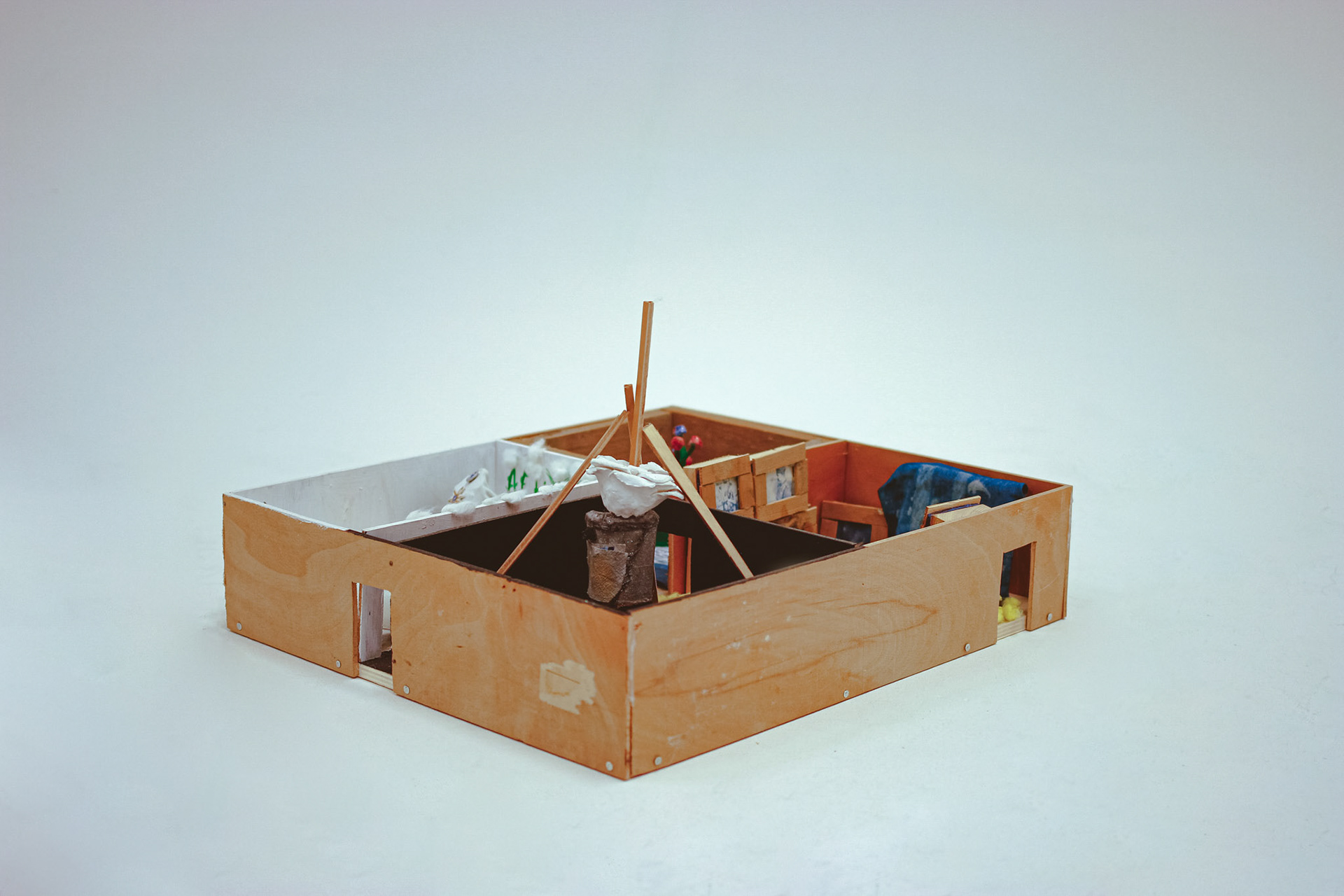
Sculpture (Acrylic Paint, Air Dry Clay, Cotton, Textiles, Plywood, Cyanotype Print, Oil Paint, Cardboard) 50 x 50cm, 2024
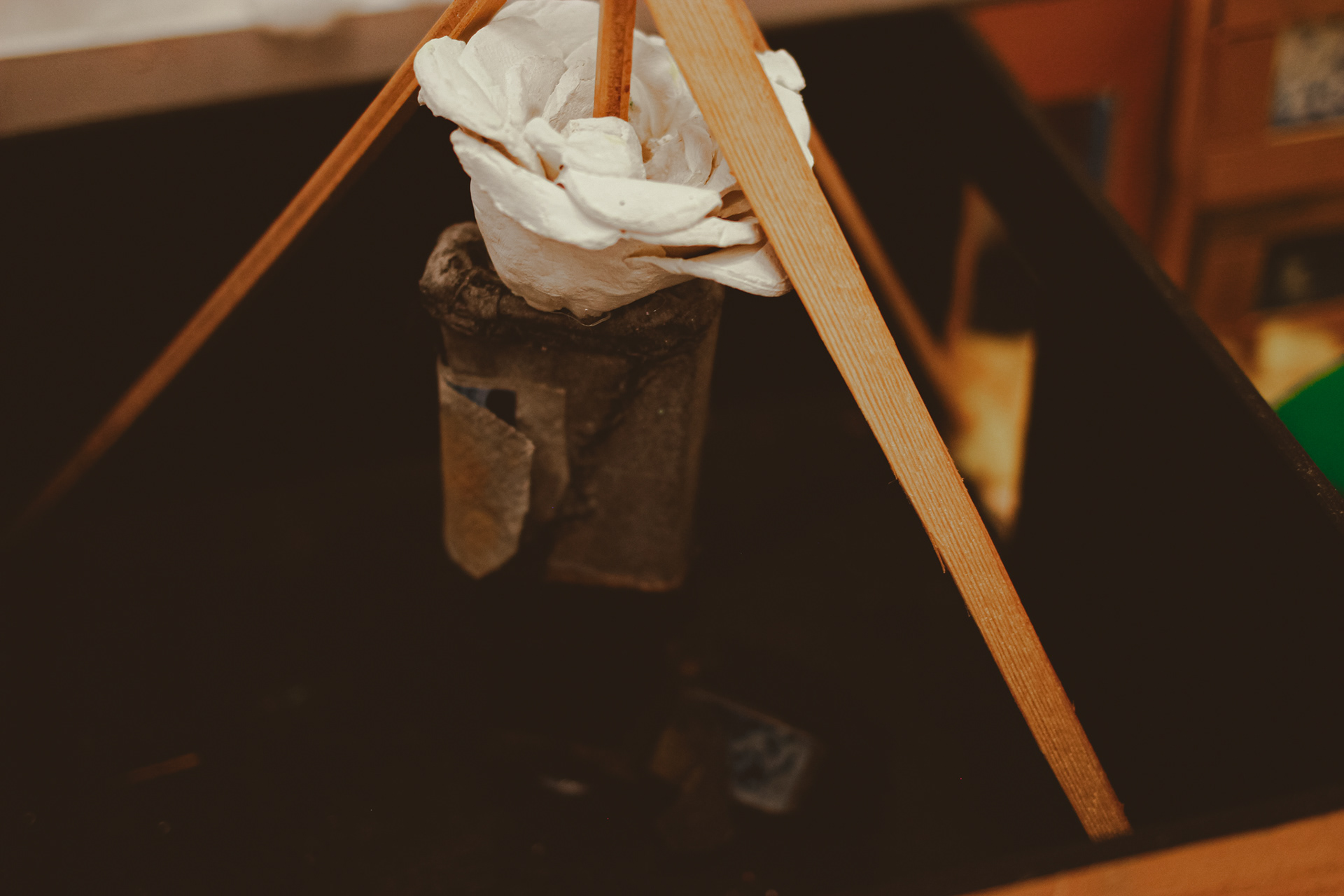
Close up of the sculpture: The bedroom
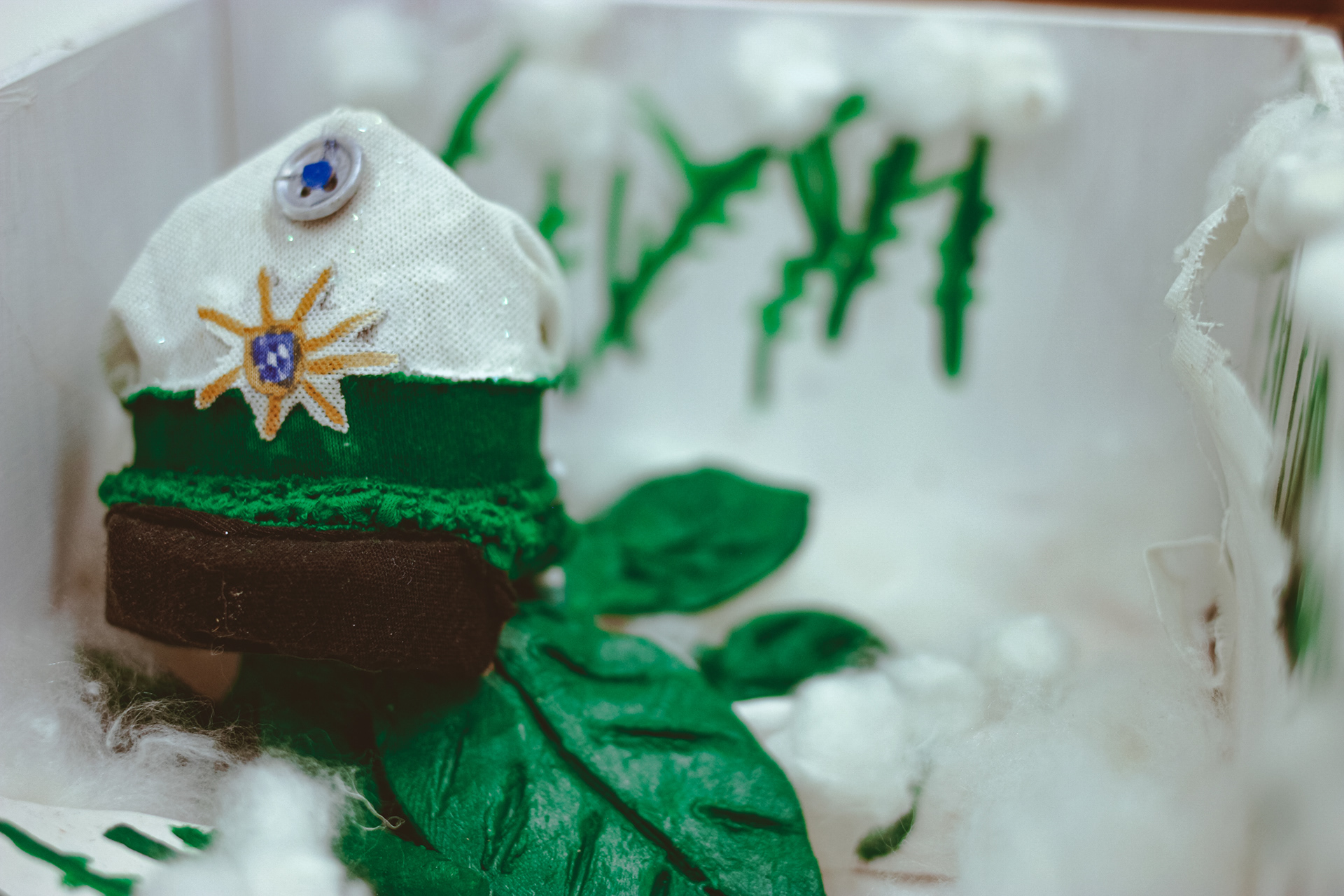
Close up of the sculpture: The bathroom
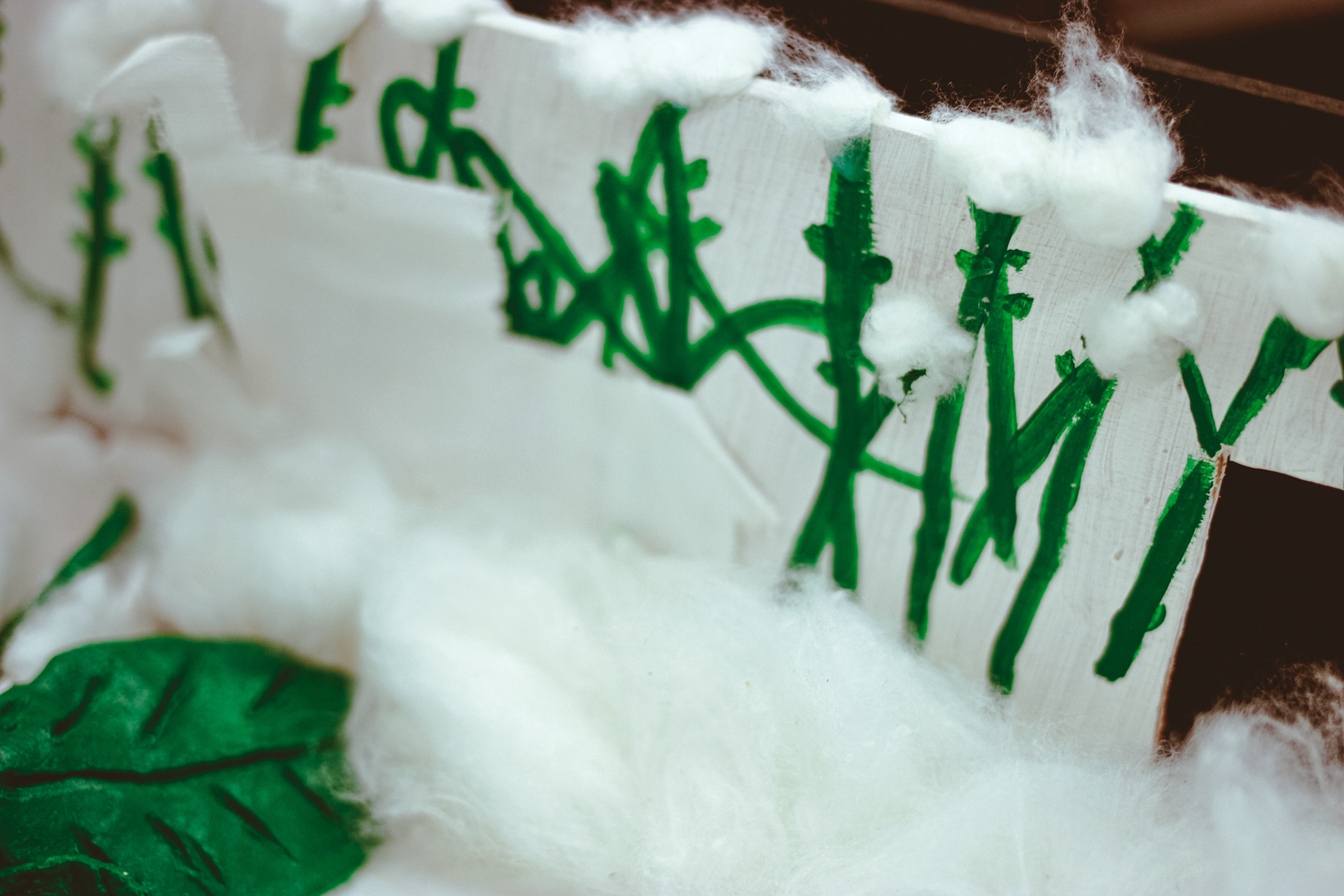
Close up of the sculpture: The bathroom
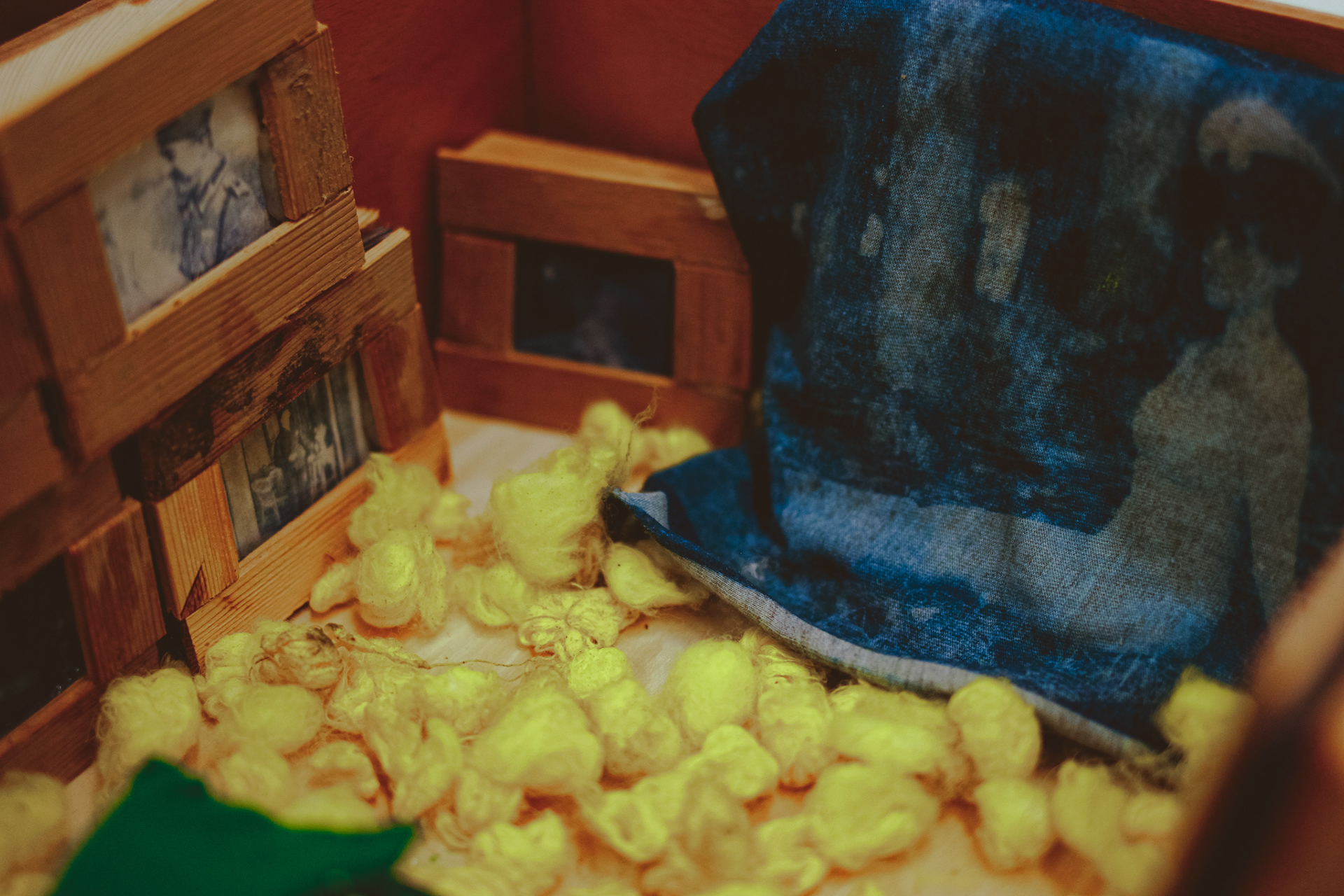
Close-up of the sculpture: The living room
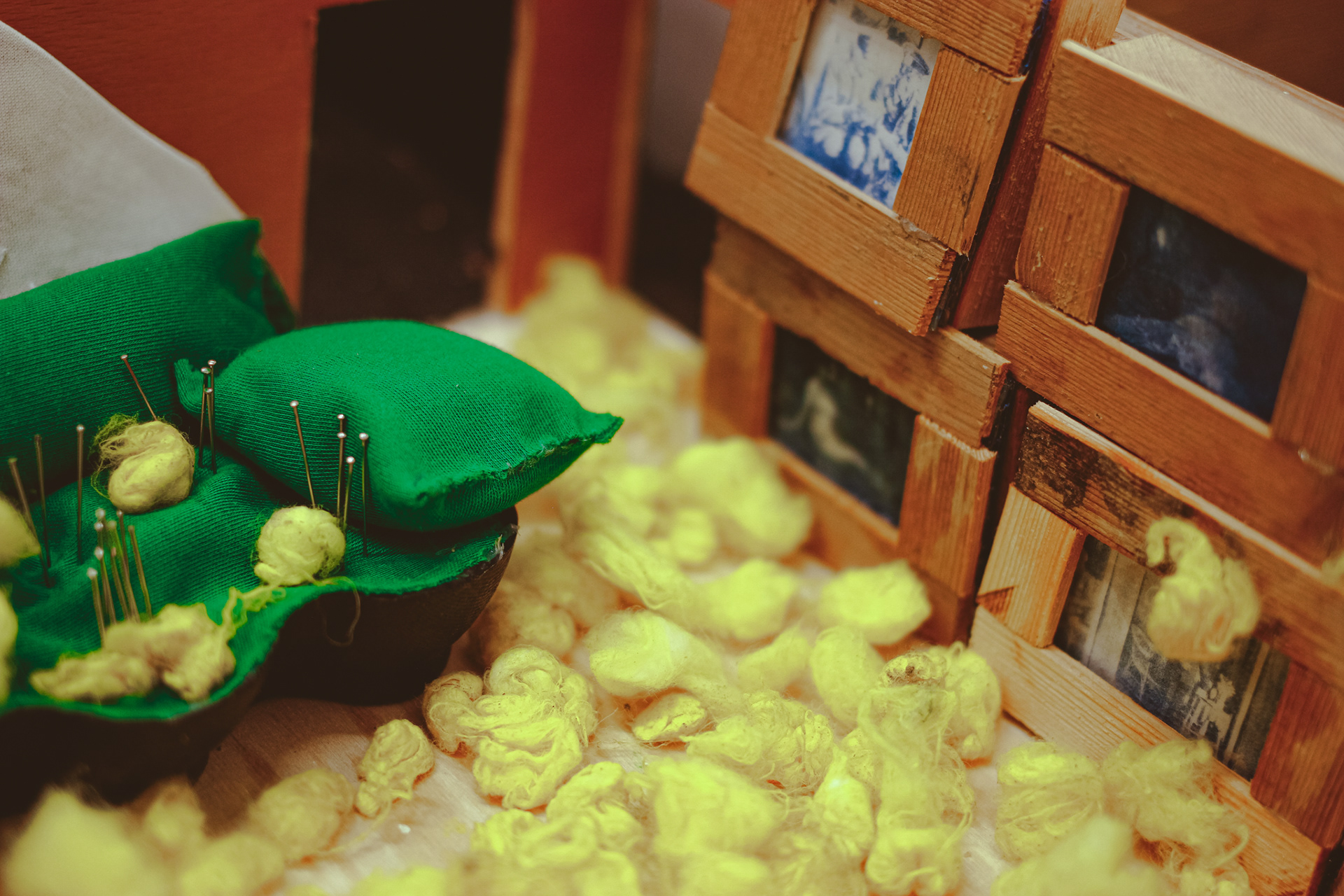
Close-up of the sculpture: The living room
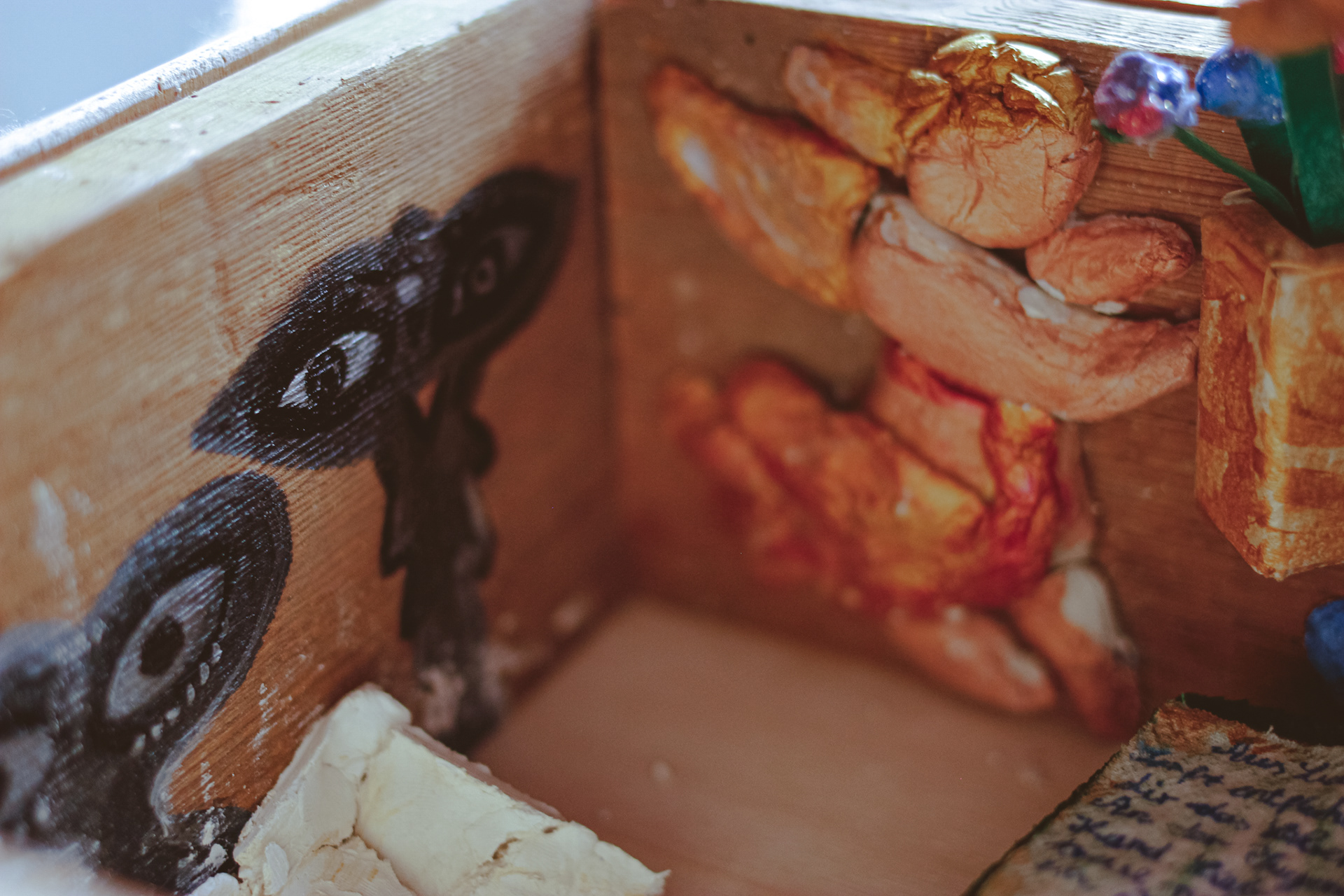
Close-up of the sculpture: The kitchen
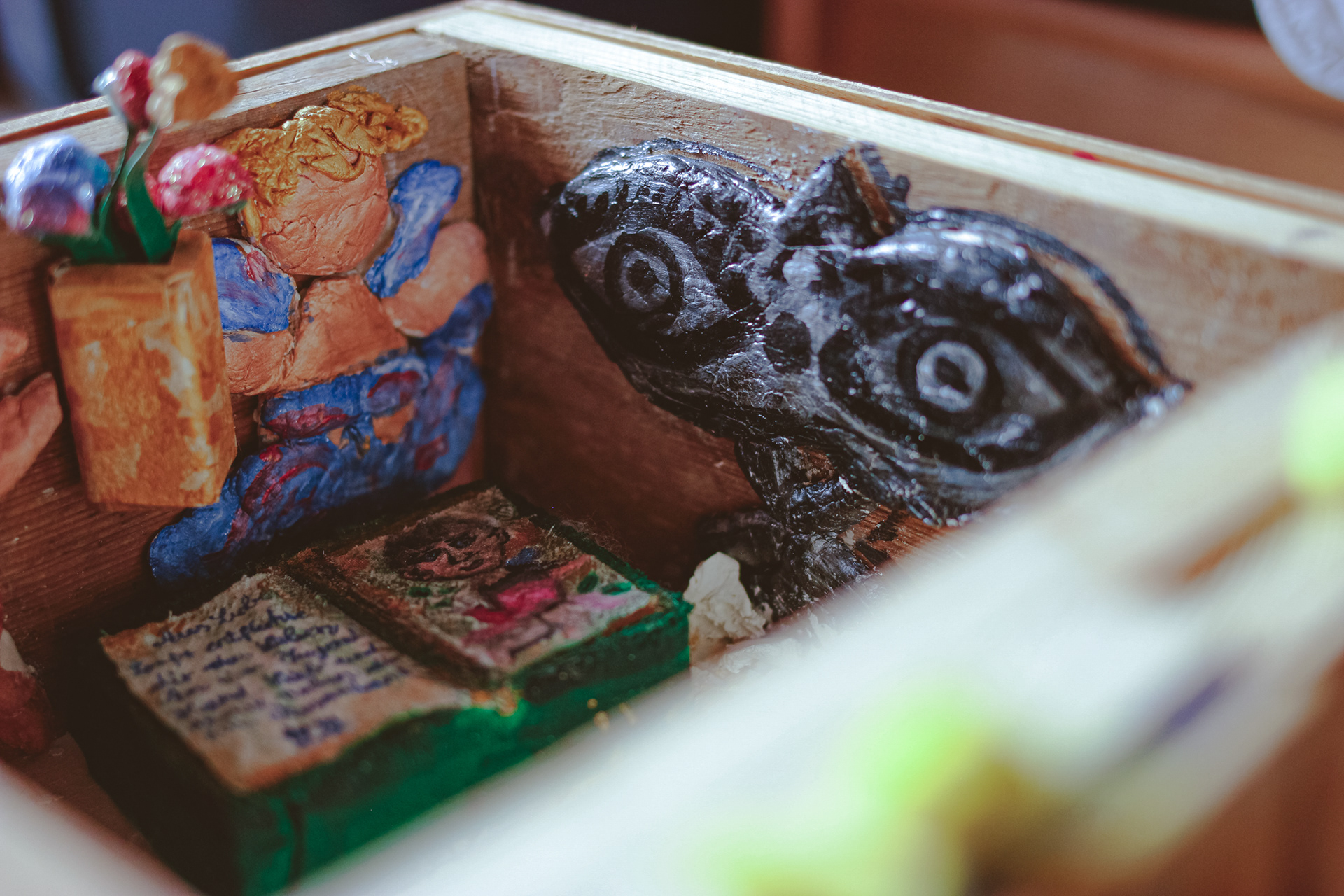
Close-up of the sculpture: The kitchen
,,Describe a piece you’ve created that has held the most emotional weight for you. What makes it significant?
One of the most emotionally significant works I’ve created is Das Blütenstaubzimmer, a sculptural reconstruction of my grandparents’ apartment. This piece is a deeply intimate exploration of memory, inheritance, and trauma. Working on this project, I felt like stepping into a fragile world between past and present. The miniature format—almost dollhouse-like—evokes a sense of nostalgia and familiarity. Yet the materials I chose—plywood, textiles, wax—suggest fragility and impermanence, highlighting how memories are delicate and often incomplete.
The installation invites viewers to examine history in a layered way. Each room reveals stories of love, loss, and resilience, but also the burden of cultural and political inheritance. For example, the bedroom features a large book containing photographs of my grandfather, supporting a delicate white rose. This juxtaposition symbolises the fragile endurance of antifascist ideals despite unstable foundations. The kitchen, inspired by my grandmother’s 1934 poetry album, brings warmth and sentimentality through angel stickers and flowers. Yet the presence of “Silver Wax Eyes” introduces a critical element, questioning how inherited cultural perspectives shape the way we see ourselves and others. This piece means a lot to me because it encapsulates my personal history, but also resonates with broader social and political concerns. It’s an invitation to engage with history not as a distant story but as something living and relevant, full of contradictions and emotions. Creating Das Blütenstaubzimmer was a form of healing and reflection. It challenged me to confront painful family legacies while honouring their complexity and humanity.''
Excerpt from Artit.net Spotlight Interview, 2025